
The rise of Columbus: Why momentum matters in the new Midwest
The cities travellers return to are rarely the ones that stand still.
Growth brings investment, creativity and change, transforming the places people live into the places visitors want to explore. Columbus is one of those cities.
Ohio’s capital has undergone significant change in recent years, with new investment, businesses and residents helping reshape its neighbourhoods, food scene and cultural experiences. That progress has also attracted international recognition, with Columbus named among Condé Nast Traveler’s Top 10 Best Big Cities in the U.S. in 2025 and 2024.
The result is a destination that combines the energy of a growing city with the accessibility and ease that make it a strong addition to a Midwest itinerary.
The latest U.S. Census figures show the Columbus region growing at twice the national rate, adding more than 21,000 residents in the past year. Major companies are also committing billions of dollars to the region, including Intel’s $28 billion semiconductor campus, while Columbus airports is undergoing a transformation with the construction of a new $2 billion terminal expected to open in 2029 and offering more than 55 nonstop destinations, giving visitors more connectivity options than ever before.
For the travel trade, the significance of that growth is not simply economic. It is what that momentum has created for visitors.
The impact of that growth is most visible in Columbus’ neighbourhoods.
The Short North Arts District has become the city’s creative hub, where historic buildings now house independent galleries, boutiques, restaurants and cafés. Its illuminated arches have become a recognisable symbol of Columbus, while events such as Gallery Hop bring artists, makers and visitors together throughout the year.
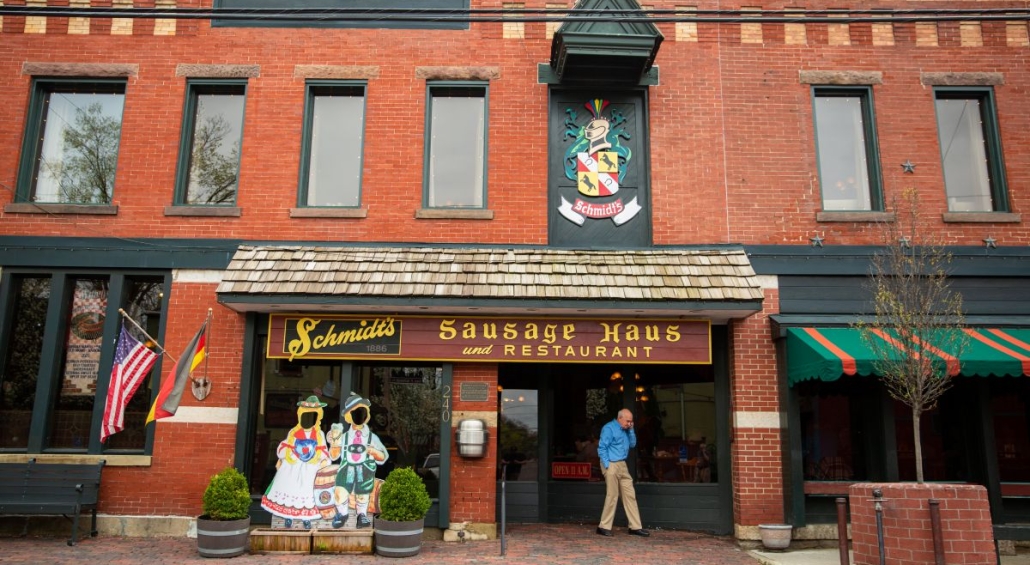
German Village offers a different perspective on Columbus’ evolution. One of the city’s most distinctive historic districts, its brick-lined streets and carefully preserved nineteenth-century homes provide a contrast to the modern city centre nearby. Visitors can browse the 32-room Book Loft, discover independent cafés and bakeries, and continue into the neighbouring Brewery District, where Columbus’ brewing heritage now sits alongside contemporary restaurants and entertainment venues.
Downtown Columbus reflects the city’s wider investment in creating spaces where visitors and locals can spend time. The redevelopment of the Scioto Mile has transformed the riverfront with parks, walking trails and public spaces, while attractions including COSI, named the USA’s Best Science Museum by USA Today readers six times, provide another reason to extend a stay. That combination of investment, creativity and community is also shaping Columbus’ food culture, with North Market serving locals and visitors for 150 years alongside a growing collection of independent restaurants, coffee shops and breweries.
Sport provides another compelling reason to add Columbus to a Midwest itinerary. The city offers UK visitors the chance to experience American sport at every level, from NHL hockey with the Columbus Blue Jackets and Major League Soccer with the Columbus Crew to the huge college football following surrounding Ohio State. It is an opportunity to experience not just the games, but the atmosphere and traditions that make American sport so appealing to international visitors.
For operators, Columbus works as both a standalone city break and a flexible addition to a wider Midwest fly-drive itinerary. Two or three nights can be built around local neighbourhoods, food, sport and culture, while its central location makes it easy to combine with destinations including Hocking Hills, Amish Country, Cincinnati, Cleveland and Indiana.
For clients looking to experience a different side of the United States, Columbus offers a city that feels contemporary, accessible and full of local character, while fitting naturally into a wider Midwest itinerary.
Click here to find out more about visiting Columbus.