
WASHINGTON DC: FOOD, POLITICS, MUSEUMS, MARVELS AND MORE IN ‘THE DISTRICT’

To begin with, I was a little bit wary of Washington DC.

I’d lived in New York for a few years and never bothered with the train trip down there. I’d pictured a city full of stuffy museums and button-down political wonks on expenses: not my idea of a good time. But over the years, television has slowly beaten me down. First Homeland, then House Of Cards, with their alluring montages of the city.

Then Aer Lingus opened up a new direct route to the city, which makes it much easier to get to from Dublin. And finally a friend provided the clinching, if completely politically incorrect, argument: “DC is actually a lot blacker than you’d think.”

Quite apart from its most famous resident, Washington has one of the highest proportions of African-Americans in the union and the city has a rich and varied history of black music, food and culture. It all provides a much-needed contrast to the slightly starched, heavily policed feel that the rest of the city can have; the sidewalks of America’s capital city teem with cops and Secret Service-type blacked out SUVS glide silently by every few minutes.

On our first day in the city we undertook a black food walking tour of the city, which is, hands down, the best guided tour I have ever been on. It took us along U Street, the beating heart of the city. Known also as Black Broadway, U Street has also been the home of a vibrant music scene for over half a century – the legendary Duke Ellington used to make his home there. For the purposes of the tour we sort of munched our way from neighbourhood to neighbourhood and in the meantime soaked up a bit of civil rights history.

We sampled unctuous macaroni and cheese with spicy fish from a roadside booth. We slurped up tiny bowls of gumbo, a silty Creole broth with sausage and shrimp, back ribs and fried green tomatoes from a Southern-themed place called Eatonville.

Around the corner was the famous Chilli Bowl restaurant, which is a favourite of everyone from Obama to, er, Bill Cosby (news of his fall from grace seems not to have reached most of DC). Meanwhile our excellent guide took us from the area’s humble beginnings around the time of the Civil War through the Jazz Age to the race riots of the 1960s and beyond (The riots in nearby Baltimore were just fizzling to a standstill while we were there).

As some quite spectacular luck would have it, we undertook all of this on the very day that DC’s famous Funk Parade, a once-a-year street festival, was taking place.

Our first inkling that something was happening was when we passed a huge yard full of musicians and people engrossed in what looked like an arts and crafts expo. In fact they were making robot masks for their bit of the parade and as the robots danced past us, followed by a troupe of shimmying black girls in hot pants and a brass band that writhed as they played, you were half inclined to wonder if your fried green tomatoes had been laced with some sort of hallucinogenic. As the day turned into evening the U-Street area became even more lively with most of the bars opening out onto the street.

Spy Museum, Washington DC

The best way to see the many monuments of Washington is probably by bike; they’re a little bit too spaced out to be comfortably walkable, but a bus tour would also miss the best bits.

The cliché about The White House is that its not as impressive when you see it in real life and this might be true, but the war memorials certainly pack an emotional punch. This is particularly true of the Vietnam memorial, which consists of a large black wall inscribed with the names of the thousands of American men and women who died in the conflict. On the day that we visited, there were groups of Americans laying flowers and weepingly looking for the names of relatives who never came home.

The memorials are particularly beautiful at night when they are illuminated. Many of them are open 24 hours and offer great views of the city.

The famous Arlington National Cemetery, located just across the Potomac River, is also a prime place to visit and home to dozens of memorials including the Coast Guard Memorial, the Space Shuttle Challenger Memorial and the Spanish-American War Memorial. On the way there we passed through the famous underpass from the opening montage to House Of Cards; the locals roll their eyes as tourists stop to gawp at this unprepossessing stretch of concrete.

My preconception of Washington as being quite sedate was ill-founded. True we were there during two festivals – the aforementioned Funk Parade and Cinco De Mayo, with its obligatory margaritas – but even during the rest of the year, DC is livelier than you might expect. The city has one of the highest proportion of single people in all of America and there is a vibrant bar and club scene: even on a week night the bars were full until well past 1am.

It always seems to be happy hour somewhere and a bar stool is a terrific vantage point to observe that other popular Washington pastime – networking – particularly at the Willard Hotel on Pennsylvania Avenue.

According to local lore, the term lobbyist was coined by President Ulysses S Grant during his tenure in office in the late 1800s. Grant, it was claimed, would frequent the hotel to seek reprieve from the demands of office. Despite his best efforts to keep his outings private, individuals standing in the hotel lobby would approach Grant and ask him for special favours or jobs and the term lobbyist was coined. History and politics intertwine all over the city and the route from the airport took us past the famous Watergate hotel.

To escape from the heat we decamped to the Mandarin Oriental Hotel’s spa on one of the afternoons we were there. This is a little oasis of calm in the middle of the city, with a 25 metre pool, a sauna and best of all, an ice mist shower, which provided much needed relief from the oppressive temperatures outside.

We stayed at the Dupont Circle Hotel in downtown DC, which is part of the Doyle group, and every other person working there seemed to be Irish. Because of its vast proportion of government workers, Washington’s hotels actually tend to have higher occupancy during the week than at weekends and late spring/early summer, right around the time the famous cherry blossoms make their appearance (we just missed them) is high season.

Expect to pay in the region of €300 a night for a four star hotel and beware, it goes without saying, that the dollar is very strong compared to the Euro now. Between tips, tax and the siren song of outlet malls you can end up blowing a fortune if you’re not careful.

The weather forecast before we went indicated that nights might be quite cool – similar to daytime temperatures in Dublin. For this reason most of us brought coats and jackets in case things got chilly. This was a mistake; winter and indeed spring had gone with the cherry blossoms.

During the day it was scorching and at night the air hung as heavy as a tapestry. It’s advisable to get to Washington before the height of summer or else to wait until ‘The Fall’, as the temperatures during July and August can be oppressive.

To escape the heat of the city on another day we took a picnic to Great Falls Park and enjoyed incredible views of the Potomac River. This national park is located just a few miles from Washington DC itself and there are a variety of activities there, including hiking, kayaking, rock climbing, bicycling, and horseback riding, which are all pretty reasonably priced. Camping is also an option. The park is accessible from both the Maryland and Virginia sides of the river and is a local favourite.

It used to be said of Margaret Thatcher, who made many visits to DC, that the reason she always appeared refreshed at airports was that she didn’t have to bother with security or queues. Alas, there is no getting away from either now but the new Aer Lingus business class, with its full-length beds (on which I could stretch out even my 6ft frame), and revamped food menus, takes much of the pain out of travelling transatlantic.

I arrived into Dublin at 5am local time feeling like I’d had what was pretty much a normal night’s sleep. It was the perfect ending to quite a spectacular trip.

Getting there

Aer Lingus (aerlingus.com) has begun its ninth direct transatlantic service, with a new four times weekly service from Dublin to Washington-Dulles operating to January 4. Flights are operated by Airbus A330 aircraft and depart Dublin at 12.45 arriving in Washington at 15.35, with the return flight leaving Washington at 17.20, arriving in Dublin at 05.30.

Place to stay: The Dupont Circle Hotel (doylecollection.com)

Places to Visit: A bike tour around all of the monuments gives a great overview of Washington DC. There are many options but Capital City Guided Bike Tours might be the best (and cheapest) of the bunch: see bikethesites.com

Take three

1. Spying Game

The International Spy Museum is a wonderful antidote to the more “nutritious” museums of America’s capital. Let’s face it spies are just cooler than patriots. They have better lines in movies and better weapons. There is a particularly good exhibit here on the Navajo codetalkers and a great history of sneaky surveillance going all the way back to Moses. See spymuseum.org for more details.

2. Embassy thrill

During May and June more than 50 embassies in Washington, DC open their doors to the public. These events, known as Passport DC, allow participants to “travel the world” as they experience the food, art, dance, fashion, music, innovations, and manufactured goods from different countries without ever leaving the confines of the city. Well worth a look, especially if you get to peek inside some of the grander embassies.

3. Full Moon Cruise

Sail the Potomac River as the sun goes down and order from a three course menu while a live band and singer play jazz and Motown hits. The crowd may be a little older but it’s pretty good value at around $80 all in and the atmosphere on board, as well as the views of the river and the city are incredible by the light of the moon. See odysseycruises.com/washingtondc for more details
NEW YORK: HOW TO SWAP YOUR HOME AND LIVE LIKE A LOCAL IN THE BIG APPLE

House swapping can inject adventure into your life for very little cost, says Constance Harris, who swapped her Irish home for a pad on the Upper East Side.

Whether it be due to middle age, or the oppressive effect of too much responsibility, it is easy for us to slip into feeling like we will never again (afford to) have adventures such as we had in our teens and twenties.

But, hark; fade not into the grey mists of obscurity induced by the grim determination to do right.

I offer you hope.

House swapping is THE way to inject a bit of adventure into your life and all it might cost you is an airfare. In my case, last summer, it was a great price deal with British Airways, flying from Belfast to New York.

You can be a renter of an apartment (subject to landlord agreement), or the owner of a farm and you can swap your home. You can have ten children and swap with someone who also has ten children and thus you have an instant child-friendly holiday home with no hauling of buggies, car seats and cots. You can be a cat lover and luck out with swapping with a fellow feline fan.

No matter your type, there is a match for you. It is romantic. It is possible.

How house-swapping works is you list your property with an organization, many of which are now online. You may put up some photographs of your home and describe it and your locality.

You might say a little about your family, perhaps, such as children/no children so that you can attract a similar set up to your own home. Imagine it, a holiday with no need to haul Xboxes and children’s ‘must have’ paraphernalia, across the world.

You list the times of the year that would best suit you to exchange homes; there is no time limit. You list the countries, towns, whatever, that you would be interested in visiting. You can then look around for suitable matches and suitable matches can seek you.

Once agreements are drawn up between you and your match, you are off.

From the research I did, generally there is little trouble in home swapping – when done right. Which is why reputable organizations such as HomeLink (homelink.ie) and HomeExchange (homeexchange.com) are so invaluable. They offer a lot of support in the form of guidelines, contracts, advice as well as connecting you with an awesome, largely cost-free, holiday.

Small breakages or small damage, may be inevitable. If you are precious about your towels and bed linens, or anything else for that matter, just put them away. It doesn’t have to be complicated.

Several years ago, I joined HomeLink. A friend of mine who has done a lot of house swapping recommended it as being great for European swaps and HomeExchange if I wanted to swap in the USA.

Founded in 1953, HomeLink is one of the oldest home swapping organizations operating world wide, with a good track record and a lot of support. Track record is very important when doing home exchanges. Homelink is €100 for a year’s membership.

My son was then 14. I wanted to swap with someone in France to improve his, and my, French. We were on HomeLink’s list for a year. Not one French person approached us to swap homes, nor could I find any. (Typical, smug frogs not wanting to leave their great-cheese, country.)

But the interesting thing to happen was that nice families from Germany emailed me offering me their lodge in the Black Forest to myself, if I would take their son, Franz, for two weeks language experience. Then, Anna, from Milan, wrote that I sounded kind and would I host her daughter for two weeks, in return for the use of her apartment in Florence at whatever time suited me?

These were incredible offers and I hadn’t even had to swap my home. But my teenager vetoed sharing his space to facilitate my suddenly exciting prospects and also any further plans I had about home swapping. So I let the dream lapse until the summer when I knew he was gone – and I was free to explore again.

So last summer, I swapped my home with Jo, a lovely, vibrant lady, living on the Upper East side of New York, a well set-up neighbourhood. She had emigrated from Ireland as a young girl and loved getting out of, often unbearably hot and steamy New York in the summer, to visit her friends and family here.

As co-incidence would happen and often does in home swapping, it turned out we were both single mothers with sons. We both loved dancing and literature. We had similar taste in décor in our homes. We enjoyed exploring life, culture and the company of friends. We even had the same herbal teas in our cupboards. We were a match.

In February, we made our agreement to swap for six weeks over the summer. We co-ordinated our needs; I offered her the use of my car, which can be a common occurrence in home swapping, thus you save a fortune on car hire. But being a ‘Noo-Yawka’, she valued public transport and declined my offer. But a hair dryer was essential.

Over the five months before we swapped, through email and a few telephone calls, Jo and I developed a friendship. She arranged temporary gym membership for me in the 92nd Street Y(MCA), I got a barbecue so she could have her family around for casual summer dining. This was house swapping – civilized, personal, exciting.

In order to get away for a stretch of six weeks, I planned and did a lot of work in advance to be finished while abroad. Within a week of landing in New York, I had a great schedule of getting up really early, to stay in touch with the time zone in Ireland, and then by 3pm in the afternoon, the rest of the day was mine to explore the city that never sleeps.

What I particularly loved about home swapping was that it was like you were instantly at home and a member of that culture and society. There I was, living in New York, with Irish-American doormen trying to match me up with rich, old, guys on the block, and advising me where to go to get the bus to Atlantic City.

I had a local hairdresser, the brilliant Alice on 2nd Avenue and 69th Street. I developed repartee with the guys selling fruit and veg on our street. I had my all-night cinema and local branch of Victoria’s Secret. I met friends in their apartments for dinner. I was living like Carrie Bradshaw.

What home swapping did was it gave me a whole new world to explore and the luxury to relax because it wasn’t costing me a fortune. So, I lived ‘as-if’.

Every morning, I walked around Central Park at around 7.30am before the city got hot. From that I learnt to appreciate what an amazing place ‘the park’ is and why Woody Allen gives paeans of praise to it. I saw how dedicated fitness-crazy New Yorkers are. I heard guys and gals break up on their cell phones, as they morning-jogged Central Park’s reservoir.

It was living theatre.

I joined Meetup (meetup.com), a social meeting site that operates the world over, including Ireland. On Meetup, you click your interests and then are notified about groups meeting near you.

So, I did tango every Friday night in the Ukrainian restaurant in the east village and got to know the crowd there and took part in New York’s Argentine Tango festival. I did actors improv classes on Saturday afternoons and attended talks on sales and building online platforms, with young people who were office drones in skyscrapers by day, dreaming of making it big with their idea by night.

Above all, no matter the heat, I walked and walked that city. I even went on a few dates and had a fabulous day out in the Bronx Zoo and at a Harry Potter convention in Brooklyn.

This was living as if. For the first three weeks, house swapping had me feeling like I wanted to emigrate. By week five I was missing home and week six, I was happy to get aboard my luxurious, brand new, British Airways Dreamliner plane and fly back home.

Sir Arthur Conan Doyle summed up the Victorian era’s idealogy when he wrote – change is as good as a rest. I shed twenty years of stress, dreariness and fear of ageing, on my change of a home swap.

Next time, I might go to New Zealand. I could be Zena. The ‘Warrior Princess’. Remember that show?!

Anything is possible when you home swap. It is fantasy living come true.

Getting there

British Airways (britishairways.com) operates up to six flights daily between Belfast City and London Heathrow, as well as eight flights daily between Dublin City and London Heathrow, connecting up to eleven flights daily to the USA.

The British Airways 787 Dreamliner is a new airplane design that includes amongst its features improved comfort seating, cleaner air, better table facilities for laptops, and lots more. Currently, the British Airways 787 Dreamliner service operates up to two flights daily from London Heathrow to Newark.

From Dublin city, prices from €502 return, including taxes.

See also homelink.com and homeexchange.com.

The Bronx Zoo

A fantastic day trip – especially enjoyed by adults. Allow at least half a day. You can get a bus to it directly from Manhattan. The Zoo is spacious, built for purpose, with lots of lovely walks that are wheelchair and child friendly, with food courts and play parks. Afterwards, get a taxi to Arthur Avenue, the last genuine Italian quarter in the Five Boroughs and enjoy the fresh pasta and canoli, like a true Italian.

Brooklyn Bridge

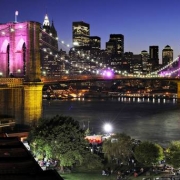
It’s romantic. It’s impressive. It’s got to be done. Take a walk across the Brooklyn bridge. New Yorkers believe its best done from the Brooklyn side into Manhattan. It takes about an hour, you see some amazing views, and it brings you into DUMBO (Down Under the Manhattan Bridge Overpass), Chinatown, or you can walk to Wall Street, fast-becoming a hip, residential quarter, as all the financial businesses abandoned it after 9/11.

Central Park

New Yorkers adore it and in summer you appreciate why. It provides relief from the heat. It’s full of amenities such as the boat house, the 19th century carousel, tea rooms, wild areas, green pastures, landscaped gardens. There are things happening at all times; theatre, music, sports, dancing, community groups, and more. Many city museums and galleries flank its boundaries so you can ‘do’ a museum, rest in the park, then ‘do’ another.

NEW SELFIE-FRIENDLY PASSPORT CARD DELAYED TO SEPTEMBER

The new Irish Passport Card will not be available to holidaymakers this summer, Independent Travel has learned.

The new card, originally planned for launch in July, is now expected to be available from the end of September, according to the Department of Foreign Affairs.

In January, Minister Charlie Flanagan launched the Passport Card and gave the target date of availability as July.

“However to improve the durability of the card the manufacturer deemed it necessary to alter the polycarbonate structure,” the department’s press office says.

“This will mean that the card issued to the public meets the highest international standards of polycarbonate cards.

“It has caused a slight lengthening of the time it takes to manufacture the card, and the new target date of issue is mid to end of September.”

The new card, which will cost €35, will be available to all Irish citizens who are over 18 and hold a valid Irish passport.

It will launch together with a free smartphone app, through which users can apply for cards and take selfies that meet international standards for passports.

The credit-card-sized passport is designed to fit in a wallet or purse, and will be accepted for travel within the EU and the European Economic Area.

It will be useful to travellers whose regular passport is with an embassy as part of a visa application process, and will also be accepted as a form of ID.

“The passport card will be particularly useful for young people who use their passport booklet as identification, especially on nights out,” Minister Flanagan has said.

Applications can be made online or via the app from the end of September, the press office says.

The card will have a maximum validity of five years (or the remaining validity of an individual’s passport book), and security features include an embedded hologram photo on a strip on the reverse side.

This is the first occasion on which this security feature will be used on travel documents.